


The China tariffs imposed by Trump are having a “massive impact” on small enterprises.
Even with a temporary reduction in President Trump’s tariffs, a little Vermont company that sells water bottles for cyclists and others is having trouble adjusting.
The stock market rose this month, and economists predicted a lower risk of recession, when President Trump temporarily lowered tariffs on Chinese imports from the exorbitant rate he had imposed in March.
Small business owners who import goods from China, such as Carina Hamel and Robby Ringer, are still in a state of emergency.
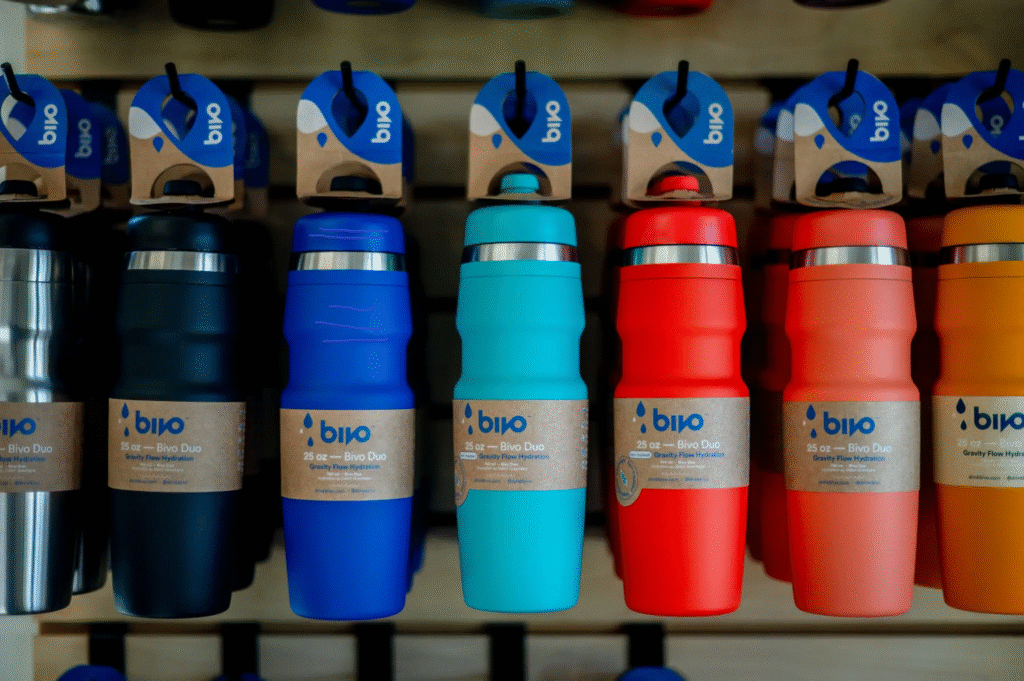
Bivo, the business owned by Ms. Hamel and Mr. Ringer, offers stainless steel water bottles with a unique nozzle that enables consumers, such as thirsty cyclists, to drink at a fast pace. The nearly five-year-old firm, which operates from a former corset factory in Richmond, Vermont, was expanding rapidly and approaching profitability before Mr. Trump’s tariffs put the company at risk, according to the founders.
The reduction in tariffs on the majority of Chinese commodities this month, from 145% to 30%, was a welcome change, but only in the sense that a flood is preferable to a tsunami. “Thirty percent would have stunned the world and been horrible and difficult to deal with six weeks ago — and it still is now,” Mr. Ringer added.
Because of the material they’re made of and how trade officials categorize them, Bivo’s bottles are subject to duties that are more than 30%. The tariff rate for non-insulated Bivo bottles is 47 percent, whereas the rate for insulated bottles is 37 percent.
Mr. Trump has often claimed that the tariffs are paid for by international corporations that export goods to the United States. However, in reality, importers like Bivo pay the duties to the federal government when goods arrive at a U.S. port.
According to Mr. Ringer, “It still has a huge impact on the cash, and it still necessitates rethinking an entirely new plan.”
Bivo has now predicted that sales will be 30% less than what it had previously projected, mostly due to the fact that many stores, which purchase around two-thirds of its bottles, are now purchasing less outdoor equipment as they attempt to make their way through economic uncertainty.
Businesses of all sizes are feeling the effects of Mr. Trump’s tariffs. The CEO of Walmart stated this month that the massive merchant would likely not be able to “absorb all the pressure” from the tariffs.
Small enterprises are at a higher risk from tariffs. Ebehi Iyoha, an assistant professor at Harvard Business School, said that they often lack the substantial financial resources necessary to deal with economic difficulties, the leverage to negotiate cheaper prices from suppliers, and the clout to petition the government for tariff exemptions.
According to Professor Iyoha, “We should generally expect small companies to be more vulnerable to trade shocks than big companies.”
The National Federation of Independent Business, a group that advocates for small firms, conducts regular surveys of its members to learn about the state of their companies. Its members’ anticipation for future sales decreased for the fourth consecutive month in April. The federation wrote in a note accompanying the survey findings that millions of small businesses “acquire imported goods as inputs to their operations and those supply chains are currently at risk.”
Last year, the United States imported $439 billion worth of goods from China, and numerous companies, including Bivo, claim that they are now unable to acquire their products elsewhere.
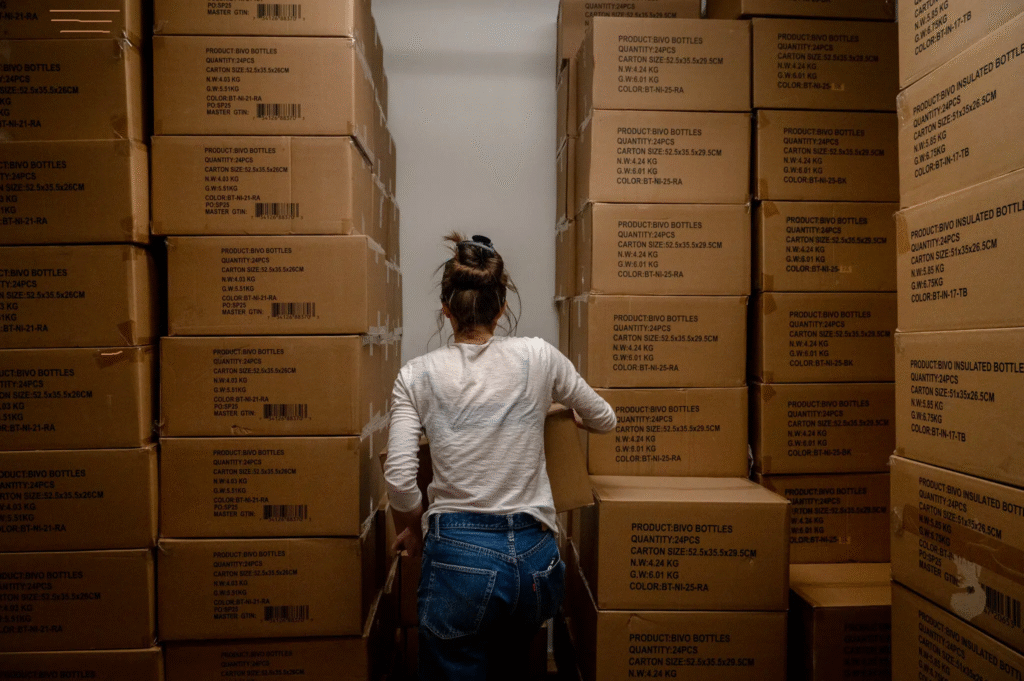
Mr. Ringer and Ms. Hamel, who are married and reside a few doors from Bivo’s offices in Richmond, a trailhead town on the Winooski River, may have had it much worse.
Days before Trump first imposed his tariffs this year, they had brought around 50,000 of their bottles from China in anticipation of high demand. “Just dumb luck,” stated Mr. Ringer.
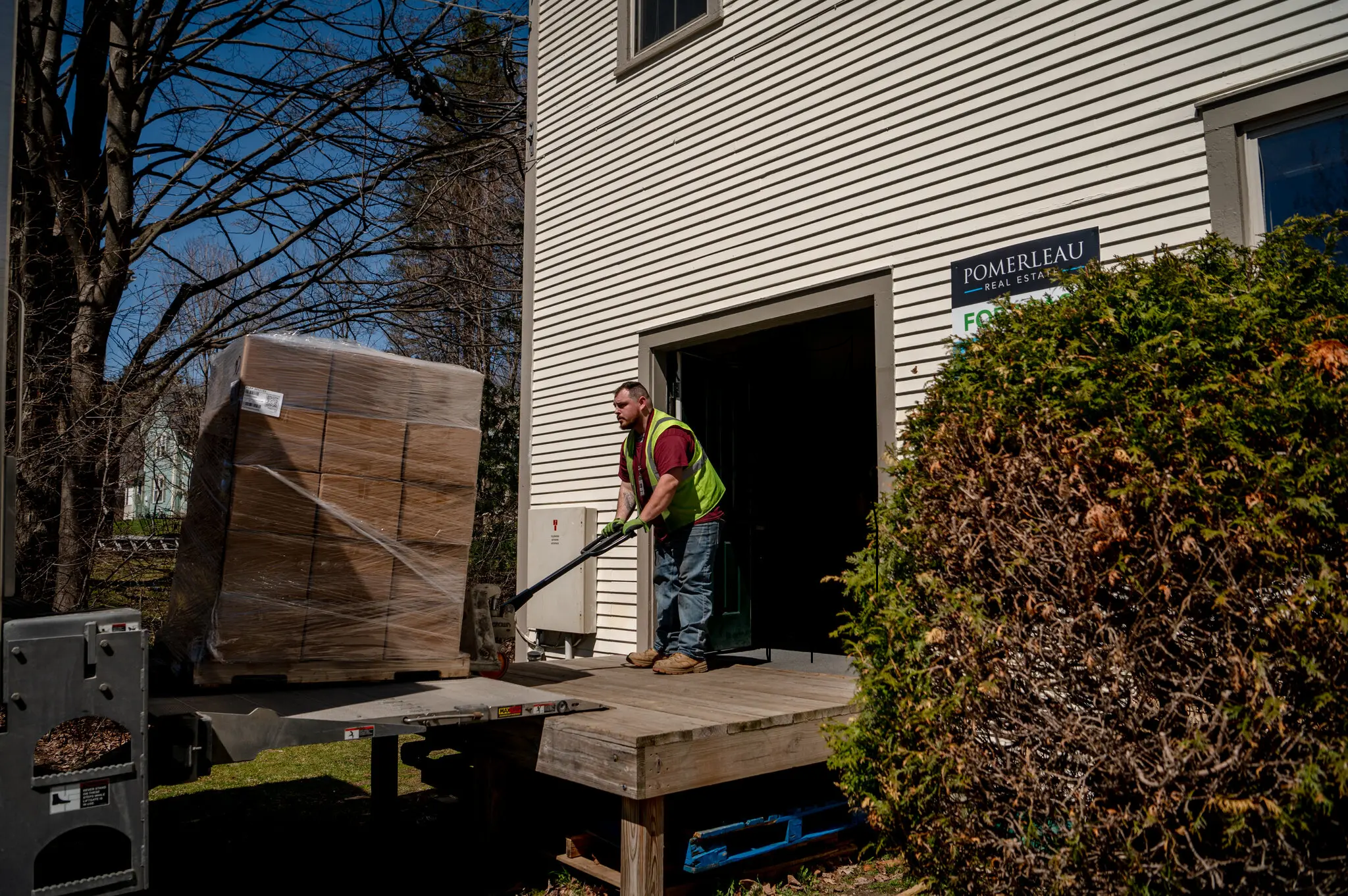
However, Bivo was forced to cease importing due to the prohibitive tariffs, which reached 145%, as it lacked the funds to pay the levies. However, it had agreed to purchase an additional 30,000 bottles from its Yongkang, China-based supplier, Haers.
Ms. Hamel, Mr. Ringer, and their six full-time workers switched to survival mode.
Ms. Hamel traveled to Europe in order to determine if the company could market its bottles there, but she came to the conclusion that it would take too much time to sell a large number of them there quickly. Ms. Hamel was at her worst during the vacation since the tariffs were implemented. “I still feel super optimistic we can make it through this, but I think it’s going to be really freaking hard,” she remarked from England.
She did, however, make some progress. Ms. Hamel discovered a warehouse in the Netherlands where Bivo’s bottles could be transported from China for distribution in Europe. A German retailer of outdoor equipment announced that it would begin selling Bivo’s bottles.
Mr. Ringer traveled to China to petition Haers for more favorable conditions after Ms. Hamel got back. Mr. Ringer was given additional time to pay for the bottles by the supplier, which gave Bivo some financial respite, even though it refused to reduce the price.
A request for comment from Haers went unanswered.
Mr. Ringer previously inspected the warehouse’s products in China to ensure the quality of production. However, he was forced to climb over pallets in the aisles in order to see the bottles this time. Customers had held off on sending their items to the warehouse in order to avoid paying the 145 percent tariffs.
After Mr. Trump lowered tariffs on China for 90 days on May 12, Ms. Hamel and Mr. Ringer came to the conclusion that they could now afford to pay the tariffs on a small shipment: 7,624 of the 30,000 bottles they had committed to purchase. According to their calculations, they will pay $24,436 in duties on the shipment, as opposed to an estimated $3,645 under the tariffs that were in place before Mr. Trump assumed office.
The bottles, which cost between $34 and $54, will not see a price hike, according to Ms. Hamel and Ringer. Before tariffs, Bivo pays approximately $8 for each bottle and sells it to wholesalers for about $20.
Tariffs, according to their detractors, harm business owners like Ms. Hamel and Ringer. After observing that the majority of sports water bottles were made of plastic, the couple came up with the notion for a stainless steel bottle for athletes in 2019 while cross-country skiing on Oregon’s Mount Hood. They have invested $500,000 of their own money in Bivo and used their house as security for a line of credit for the company.

However, proponents of the tariffs argue that China has subsidized a number of sectors, such as steel and aluminum mills, giving the nation’s producers an unfair edge over companies in other countries. American companies have been urged to relocate their operations to the United States by Mr. Trump and his advisers.
Although Bivo has pondered producing bottles in the United States, he has come to the conclusion that it would raise the cost of each bottle to at least $50. The Owner stated that many enterprises would be unable to move their operations to the United States without substantial governmental help.
Mr. Trump’s tariff strategy is designed solely to theoretically penalize China, when in reality it is harming American enterprises as well, according to Ringer. It is not intended to promote American production.