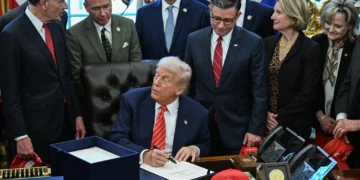



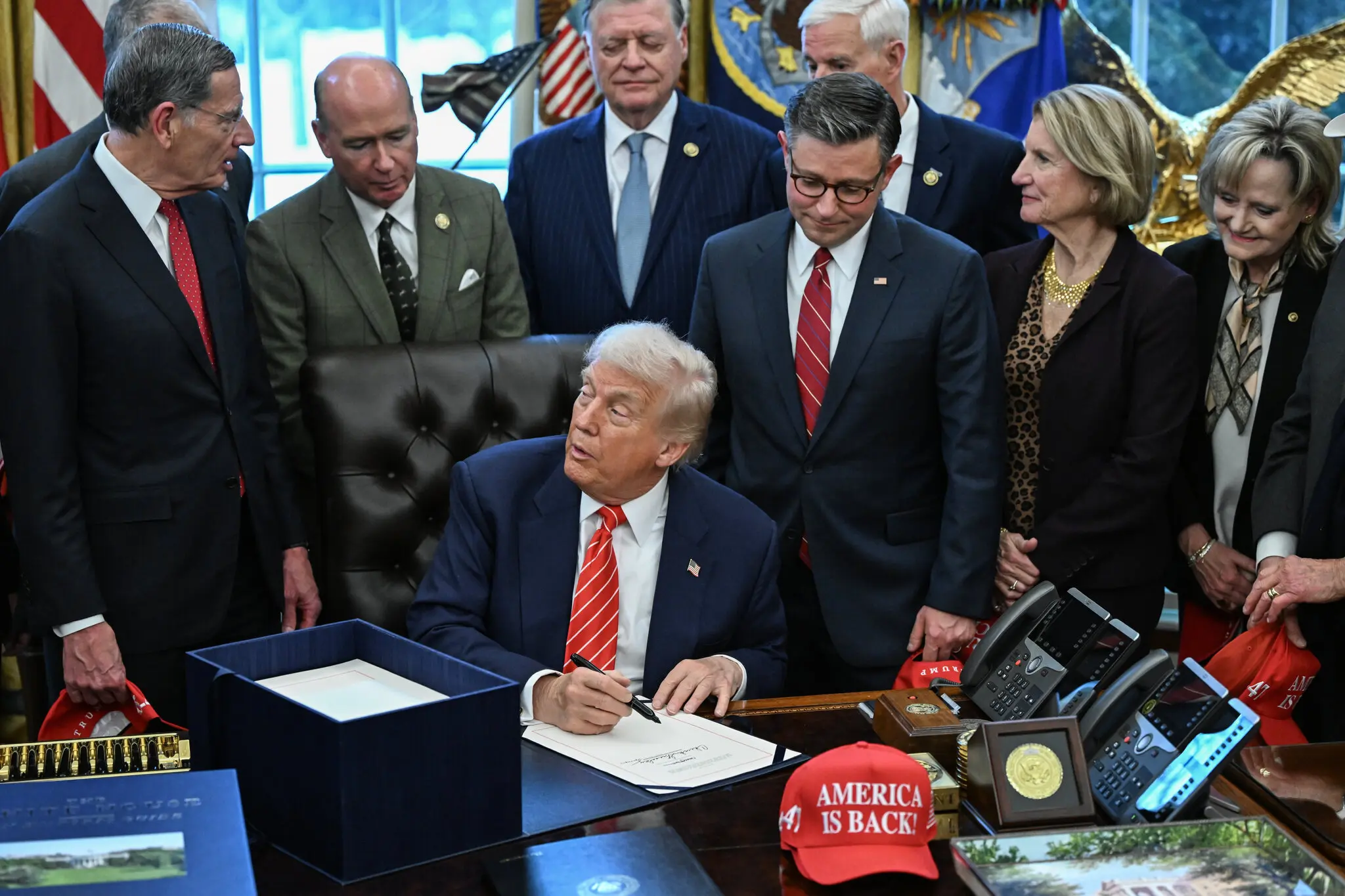
Bill to reopen government is signed by Trump.
The Department of Homeland Security will receive funding from the bill through the week’s end, and negotiations to reduce the number of immigration agents appear to be challenging. A partial government shutdown ended Tuesday as President Trump signed a spending package to reopen major parts of the government as well as fund the Department of Homeland Security during his negotiations with Democrats over restrictions on the administration’s immigration crackdown.
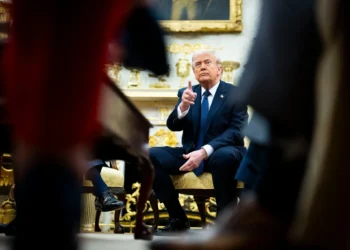
The package was approved by both parties in the House by a vote of 217 to 214, and lawmakers from both chambers gathered in the Oval Office to celebrate the end of the shutdown. But under the deal, the money for the Department of Homeland Security lasts just through the end of next week.
The vote in the House capped an extraordinary spending fight that erupted 11 days ago, when the fatal shooting of an American citizen by federal immigration agents in Minneapolis torpedoed what had been a bipartisan deal to keep federal funding flowing and touched off a fevered round of negotiations. Senate Democrats demanded that any new homeland security money be tied to limits on Mr. Trump’s campaign to deport people. But even though the president endorsed the deal, which he reached with Senator Chuck Schumer of New York, the Democratic leader, conservative Republicans were dissatisfied with the concessions it included nearly thwarted it in the House.
On Tuesday, Speaker Mike Johnson fought with an enthusiastic group of hard-line holdouts on the House floor for nearly an hour before he was able to gather a bare majority to bring it up. Such messy and drawn-out scenes have become routine in the chamber, where Mr. Johnson has only a slim majority to work with. “I share the frustrations of many that the Senate altered our deal at the last minute,” Representative Tom Cole of Oklahoma, the chairman of the Appropriations Committee said. “But our obligation is not to those emotions — it’s to the American people.”
While the package brings the current partial shutdown to a close, its passage only created another funding cliff for Mr. Trump and congressional leaders, who now have roughly 10 days to strike a deal imposing new restrictions on immigration agents. If they fail, regular funding for the Department of Homeland Security would lapse.
Key Democrats have stated that they will not vote for another temporary measure if a deal is not reached by the end of the week next week. Democrats and Republicans are still very far apart regarding the changes they are willing to accept. Most Democrats, 193 of them, voted against the spending deal on Tuesday, a reflection of how toxic funding the Department of Homeland Security and ICE has become in the party.
It was supported by 21 people. “I will not stand by and give any more money to Stephen Miller and Kristi Noem to bankroll an out of control operation that is terrorizing communities and shredding the Constitution,” Representative Jim McGovern, Democrat of Massachusetts, said, naming the president’s senior adviser and architect of his hard-line immigration policies and the homeland security secretary. “I am not interested in business as usual. Not for two more weeks; not for two more seconds.”
Twenty-one Republicans opposed the measure.
Mr. Trump, who did little to bring about a resolution to the last shutdown, made it clear from the start that he wanted to make a deal with Democrats this time and expected Republicans to embrace it. He met personally at the White House on Monday with conservatives who were threatening to derail its passage and sent emissaries to Capitol Hill to convince wary Republicans to back the agreement.
Mr. Schumer said in an earlier interview that Mr. Trump had told him that he was determined to avoid another shutdown after the nation suffered its longest closure in the fall.
I despise shutdowns. I don’t like shutdowns,” Mr. Trump said, according to the Democratic leader. “We’ve got to stop them.”
The legislation would also fund major parts of the government until Sept. 30, the end of the fiscal year, in addition to the temporary measure that would fund the Department of Homeland Security for an additional ten days to allow for bipartisan discussions regarding new immigration enforcement restrictions. Those include the Treasury, Education, Labor and State Departments and the Pentagon.
The package rejects the deep spending cuts the Trump administration had requested, but overall provide small across-the-board trims to many federal agencies.
With the immediate funding crunch over, lawmakers must now turn their attention to what promises to be a remarkably difficult negotiation to unlock longer-term funding for the Department of Homeland Security.
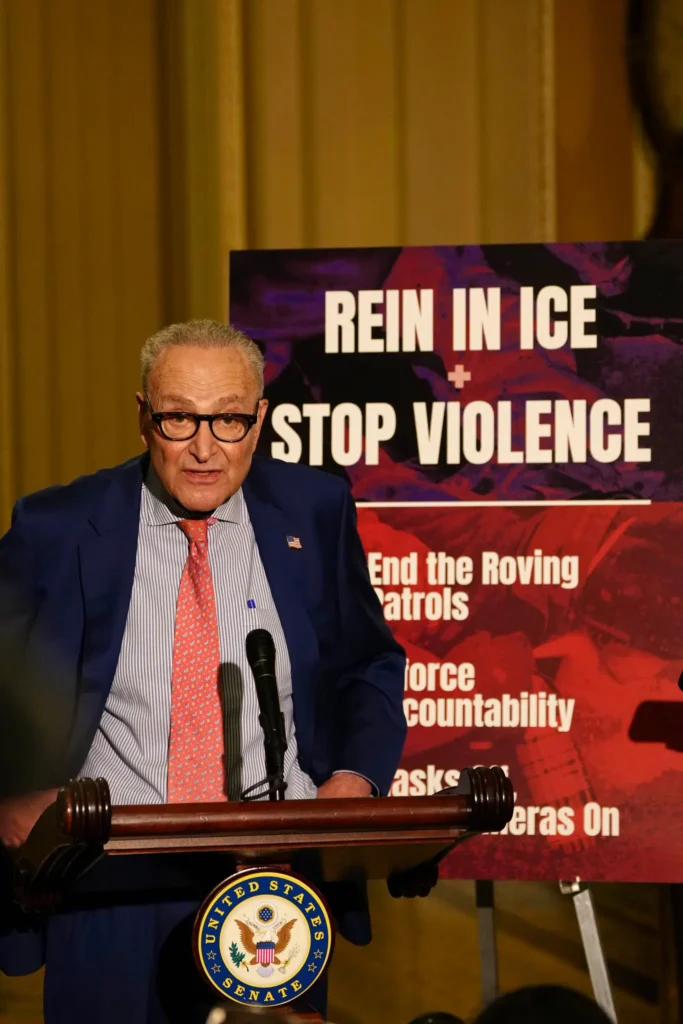
Senate Democrats last week presented a set of demands that would need to accompany any more money for the department that included a prohibition on federal officers wearing masks and a requirement that federal agents wear body cameras and carry identification. Their proposal also would put an end to roving patrols and require warrants issued by a judge for arrests and searches.
Democrats have also demanded that federal agents be subject to the same use-of-force policies that apply to local and state law enforcement agencies, which require those involved in violent incidents to be subject to independent investigations if they are accused of wrongdoing.
Following the vote, Democratic leader Representative Hakeem Jeffries of New York said in a statement, “There is no credible path forward with respect to the Department of Homeland Security funding bill” on Feb. 13, when funding is set to expire. Mr. Jeffries was among the Democrats opposing the spending package on Tuesday.
Some changes have already been agreed upon by officials from the Trump administration, who are eager to quell at least some of the public outrage that erupted after federal agents shot and killed two citizens of the United States in less than a month. Ms. Noem said on Monday that all immigration officers on the ground in Minneapolis would be equipped with body cameras and would be expanded nationwide “as funding is available.”
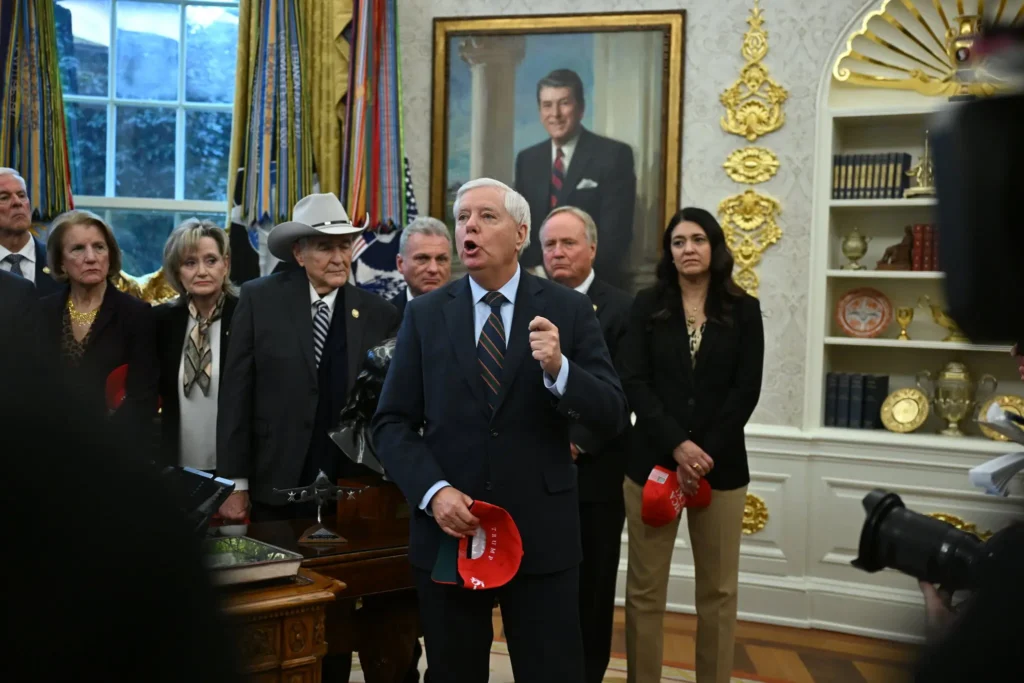
Other changes, on the other hand, appear to be harder to agree on. Within minutes of Mr. Trump signed the spending deal into law in a ceremony in the Oval Office, a defiant Senator Lindsey Graham, Republican of South Carolina, essentially suggested that his party was in no mood to negotiate, telling the president to “stick to your guns.”
Democrats “do have some good ideas, I think, but I’ve got a better idea: It’s your idea,” Mr. Graham said, addressing Mr. Trump. “End sanctuary cities.”
He and other Republicans have said any enforcement changes must start by forcing states and municipalities to drop their policies against cooperating with federal immigration authorities.
And Mr. Johnson, at a news conference on Tuesday, ruled out requiring warrants for arrests and searches, and has previously said he is opposed to mandating that officers take off their masks.
We must adhere to the Constitution. We must respect it, and those parameters must be established,” stated Mr. Johnson said. “But I can tell you that we are never going to go along with adding an entirely new layer of judicial warrants, because it is unimplementable. It cannot be done and it should not be done, and it’s not necessary.”
Shortly after, Mr. Schumer fired back from the other side of the Capitol, calling it “absurd” for “the speaker and others like him to argue masked ICE agents should get special treatment and be held to a different standard than every other law enforcement agency.”
“ICE agents wearing masks and given special treatment is against the views of most Americans who want basic accountability,” Mr. Schumer stated “Anyone defending ICE agents keeping their masks on is not seriously trying to solve this huge problem of chaos we have seen in Minneapolis and so many of our other cities.”