


India Built the World’s Back Office. A.I. is beginning to shrink.
The white-collar work that helped India become a tech powerhouse is said to be automated by AI. The nation is working feverishly to adjust before it’s too late. In Gurugram, the sprawling tech suburb outside New Delhi, Krishna Khandelwal is using artificial intelligence to build an army of chatbots designed to eliminate the kind of jobs that once lifted India into the ranks of the world’s fastest-growing economies.
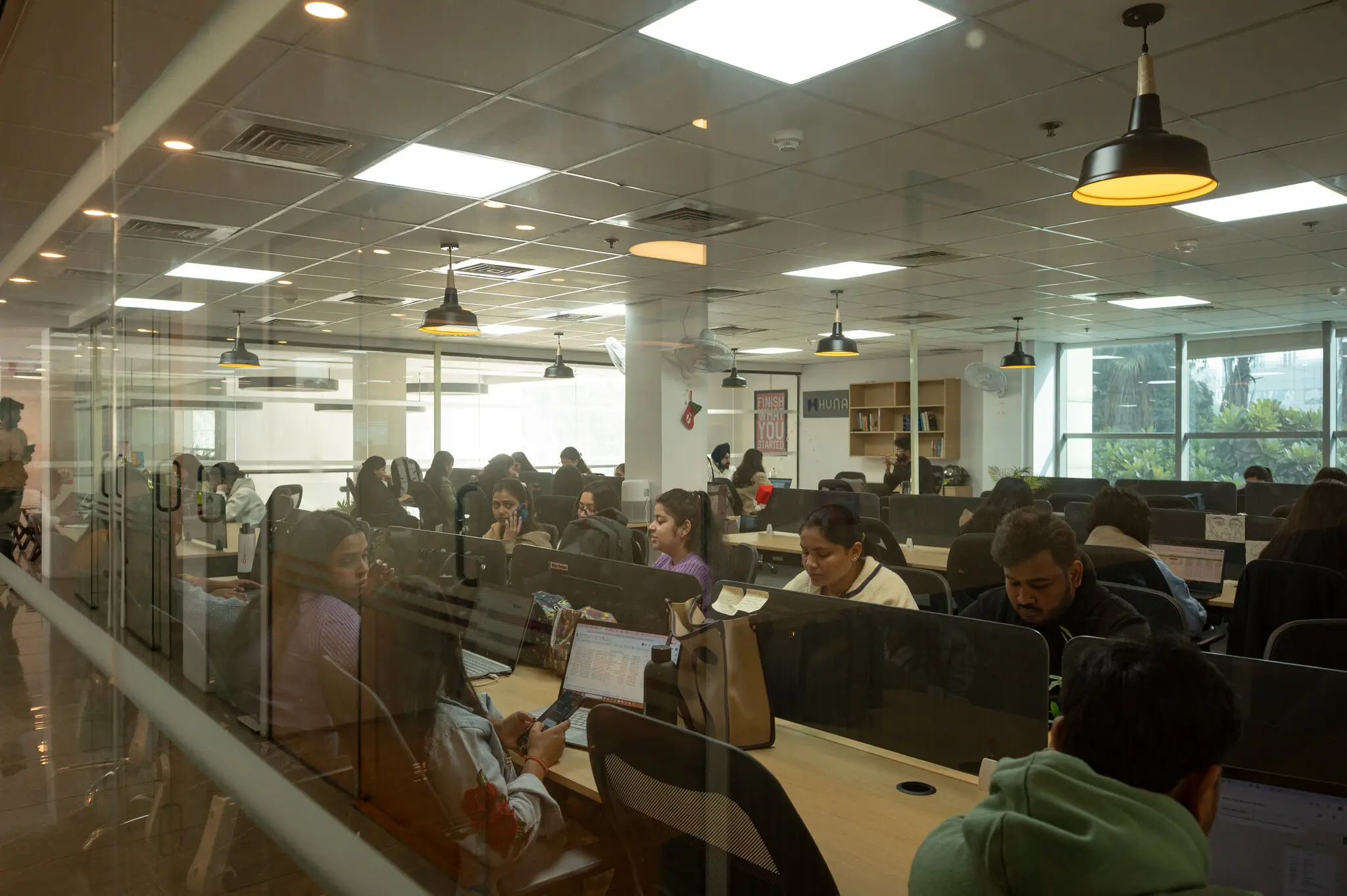
His company, Hunar.AI, has been providing businesses with individualized AI voice agents since the summer of last year. These voice agents guide job applicants through virtually every step of the hiring process, from screening resumes to orientation.

In an interview conducted in a shared workspace at the company’s headquarters, he stated, “You don’t need humans at all” for onboarding. India has been the world’s back office for a quarter of a century thanks to its educated, English-speaking workforce that can complete tasks at a lower cost than in Europe or the United States.
Today, the industry employs over six million people and is worth nearly $300 billion, or more than 7% of the nation’s GDP. Now, A.I. threatens to do to India what its outsourcing model did to the rest of the world: replace hundreds of thousands of office workers.
Economies everywhere are bracing for an era in which A.I. tools automate entire categories of white-collar work, but the brunt could fall hardest on India, undermining two decades of effort to climb the value chain and establish a place in the global tech world.
Deedy Das, a partner at Menlo Ventures, an investment firm that closely monitors artificial intelligence, stated, “It’s a matter of time.” “Markets are pretty efficient. If a tool exists that does a job cheaper, it will be adopted,” he said. “I’m surprised it hasn’t happened at a faster clip, but it will.”
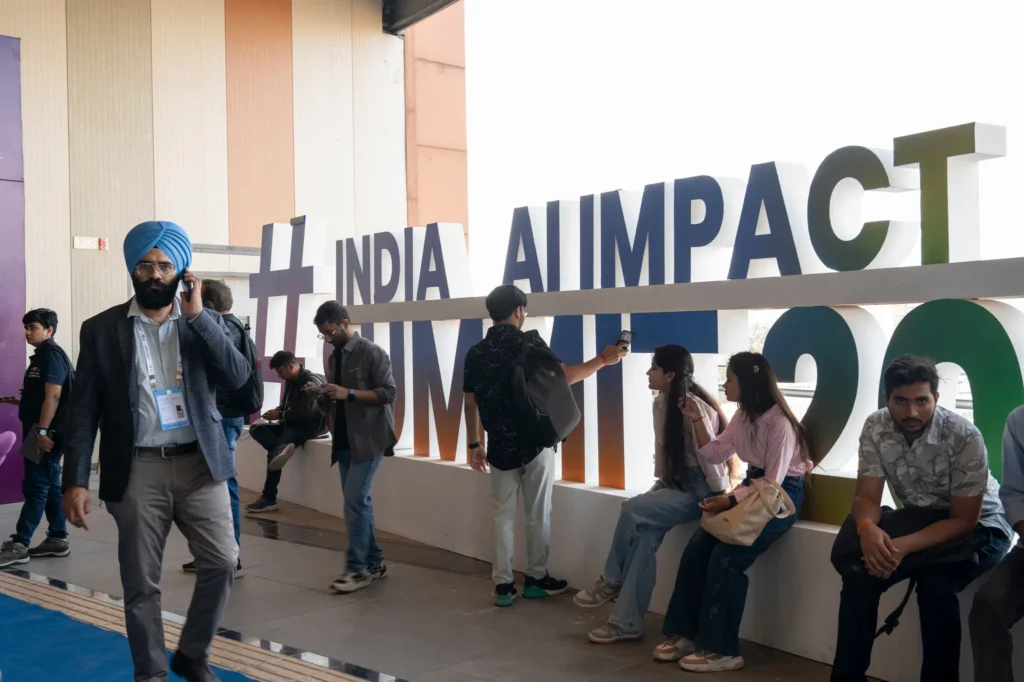
Already, the shaking is being felt. Tata Consultancy Services, one of India’s largest employers, has shrunk its work force to 580,000, a decline of more than 20,000 from a peak in 2022, when it hired 100,000 new workers in one year alone.
According to Inc42, a digital economy news outlet in India, its main rival, Infosys, has also slowed hiring, and dozens of smaller start-ups will lay off workers across the country in 2025. When it comes to learning the artificial intelligence (AI) technology that is reshaping the industry, the term “upskill” is becoming increasingly common. As a result, graduates of the country’s technical colleges and universities are finding fewer opportunities.
A speculative report released on February 22 by Citrini Research, an analytics company based in the United States, sent tech stocks in India spiraling after painting a doomsday scenario regarding AI’s impact on India specifically. The report envisioned the world in the not-too-distant future of 2028 and stated, “The entire model was built on one value proposition: Indian developers cost a fraction of their American counterparts.”

“However, the marginal cost of an AI coding agent had essentially fallen to the cost of electricity.” India’s prime minister since 2014, Narendra Modi, has acknowledged the difficulty. He has pledged, like many leaders, to make the nation an AI power, including overseeing international deals and encouraging the nation’s software engineers to create new technologies and export them to the rest of the world. “There have been some turning points that have shaped entire nations,” Mr. Modi said during an international conference on A.I. in New Delhi last month, according to a translation of his remarks.
“These turning points change the pace of development and set the direction of civilization. One such change in history is artificial intelligence. It is far from clear, however, whether India is positioned to make that transformation. While it has a highly educated work force, it lacks the infrastructure and natural resources needed to power A.I. products.
India’s largest outsourcing companies made deals with American companies like Anthropic and OpenAI at the AI conference in New Delhi to expand the use of their products and build data center capacity to power them. The announcements, while welcomed as foreign investment in the economy, underscored how reliant the country remains on the United States for everything from the microchips to the foundational models that are driving the A.I. boom.

Upheaval in the economy could undermine political support for Mr. The government of Modi, whose party suffered a defeat in the most recent parliamentary election in 2024. The country is already experiencing labor unrest, which additional job losses could exacerbate. Unemployment among educated young people reached as high as 65 percent of the total unemployed in 2022, according to a report by the International Labor Organization.
While six million tech workers might not seem like a lot in a population of nearly 1.5 billion, they represent a politically vocal middle class concentrated in some of the country’s most dynamic cities, like Bengaluru, Hyderabad and Pune.
Rajesh Nambiar, president of Nasscom, the tech industry association established in 1988 during India’s early tech boom, stated, “If you’re a young engineer getting out of university, I’d be worried.” “It’s not going to be pretty out there.”
Mr. It’s not just Nambiar and other industry leaders and experts who are downbeat. They point out that A.I. is already driving local start-ups in India that aspire to build products for global markets.
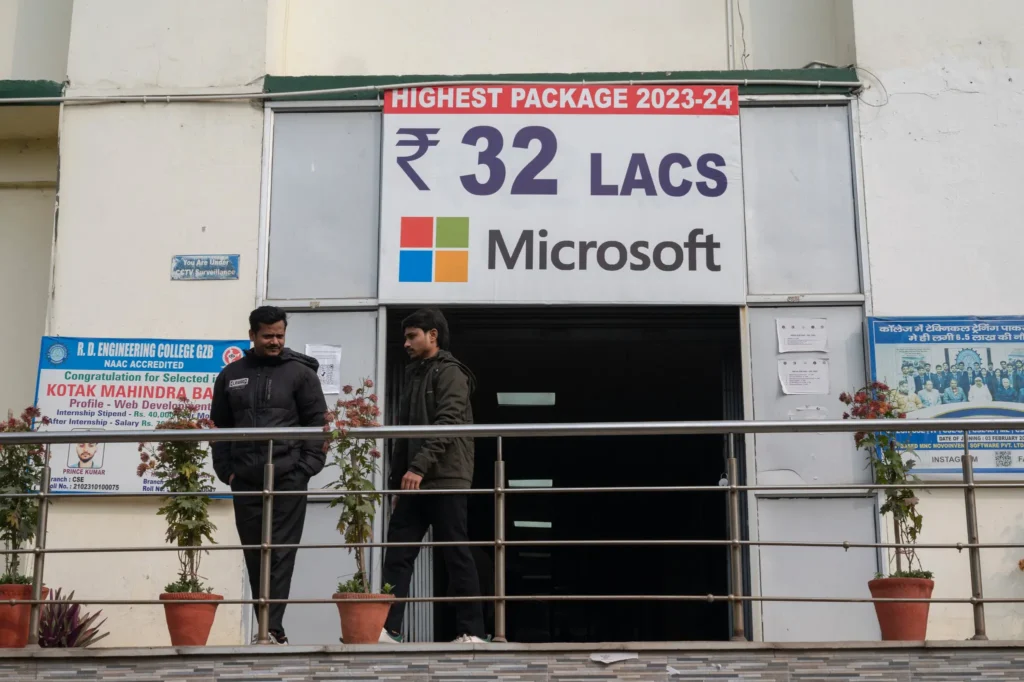

Nikhil Gupta, the founder of the Bengaluru-based e-commerce company LimeChat, stated, “This is the best place to be.” LimeChat creates chatbots for retailers to use on WhatsApp, a messaging app owned by Meta that has more users in India than anywhere else. Mr. Gupta spent his childhood in Cupertino, California, in the heart of Silicon Valley. However, after attending high school and college in India, he made the decision to establish his start-up there.
He stated, “India already has all the ingredients to provide services for the world.” For India’s outsourcing giants, deep relationships with multinationals and the ability to manage sprawling software systems mean that they will not disappear overnight. They already provide accounting and human resources services in addition to call centers. In recent years, hundreds of international companies, many of them American, have opened their own operations in India, known as global capability centers, rather than simply contracting out the work.
K. Krithivasan, the chief executive of Tata Consultancy Services, said the company planned to remake itself as an A.I. powerhouse. On an earnings call in January, he said revenues for the company’s A.I. services had swelled in the last quarter to $1.8 billion, on an annualized basis. He stated to investors, “We remain steadfast in our ambition to become the world’s largest A.I.-led technology services company.” However, the prospects appear dim on the ground. In call centers and back-office operations, hiring has slowed to a crawl.
A.I. is creating new jobs, like teaching robots to fold clothes and train chatbots to label data, but the jobs are boring, low-paying, and have few opportunities for advancement. According to analysts and executives, recent graduates can now earn more money than they ever could in entry-level tech by making deliveries for the country’s expanding e-commerce businesses. Siddharth Srivastava, a product leader at Instawork, a San Francisco-based staffing platform, stated, “But for many, cultural expectations about careers have not caught up with the lowered prospects.” “They don’t have skills, but they have ambitions,” he said. “They can’t see their socioeconomic strata doing a blue-collar job.”
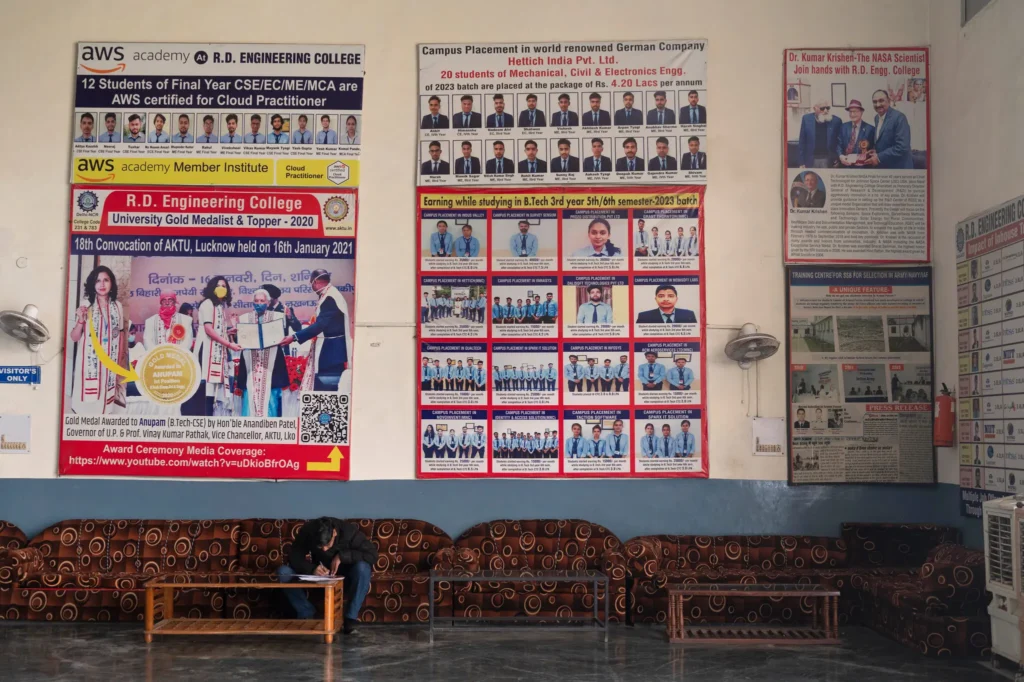
At the R.D. Tech companies like Tata and Infosys used to call Engineering College in Ghaziabad, an industrial city with 2.5 million people east of New Delhi, looking for new employees. Mohd Vakil, the dean of academics, stated that the college must now locate the businesses. According to Mr., only a few years ago, 85% of graduates had jobs upon graduation. Vakil. In the last two years, it was 75 percent. With fewer companies hiring, competition has become fierce.
A background-checking company with headquarters in Birmingham, England, Complygate, held a 10-day training course on campus for nearly 100 students in January during the break from school. The course ended with a test. Only the top scorers — roughly 10 — received job offers.
One student, Tathagat, 23, who prefers to remain anonymous, stated, “A.I. has changed the business model.” Tathagat, a native of the state of Bihar, which borders Nepal, stated that it was the responsibility of students to acquire the skills required by this new model. “It depends on us,” he said. “It’s a great time to graduate if you adapt to the times.” The college has had to scramble to keep its curriculum up-to-date with technology, which changes as quickly as semesters pass.
The president of the college, Rakesh Sharma, stated, “You have to move with the markets.” He continued, “We are making every effort to make them employable,” referring to the students. Hunar.AI provides insight into the potential as well as the disruption. Mr. Khandelwal, who is 38 years old, started by starting a conventional job-recruiting business with 65 employees who handled calls to potential candidates, primarily from the banking industry but also from local Starbucks franchises. The company then fed more than four million minutes of recorded calls into a large language model using OpenAI’s products to train its chatbots to make and conduct the calls in a robotic but fairly convincing conversational tone.
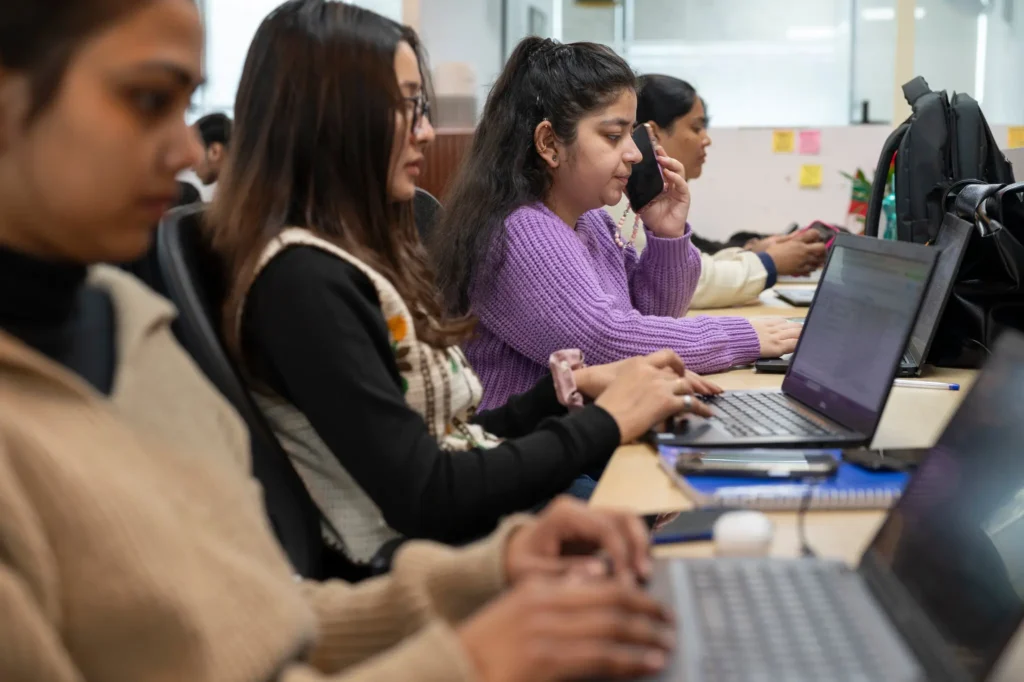
Hunar.AI has gained 70 clients and generated $3 million in revenue since its launch in August. Its success illustrates the challenge facing India. The company now has 45 recruiters instead of 65. Mr. Khandelwal expects that number to dwindle to 25 or fewer, even as business grows.
He estimated that the business had already laid off 1,000 human resources employees. By the end of the year, will be doing the work of 10,000.