


India pushes France for maximum local content in new Rafale fighter jets
Rafale localization, integration of indigenous weapons, and other India-specific requirements are the primary topics of discussion in ongoing negotiations with France. During talks between defense minister Rajnath Singh and his French counterpart Catherine Vautrin, who co-chaired the 6th Annual Defence Dialogue in Bengaluru, India and France announced a pact for the reciprocal deployment of army officers, renewed a defense cooperation agreement for ten years, and signed an agreement to manufacture French-origin missiles in the country.
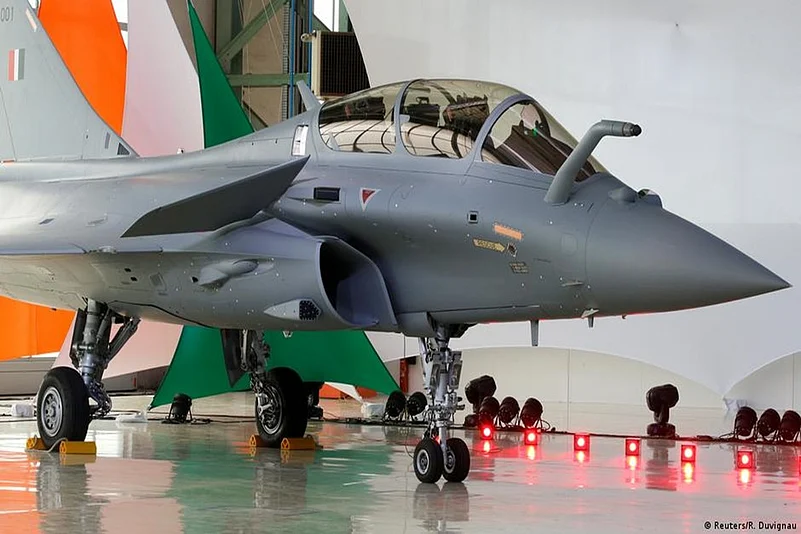
The two leaders discussed a raft of bilateral security and defence issues, including priority areas for co-development and co-production of military equipment, the defence ministry said in a statement. “They emphasised on the need for a closer defence partnership and connecting the industries of both nations, especially in the field of niche technology,” it said in a statement.
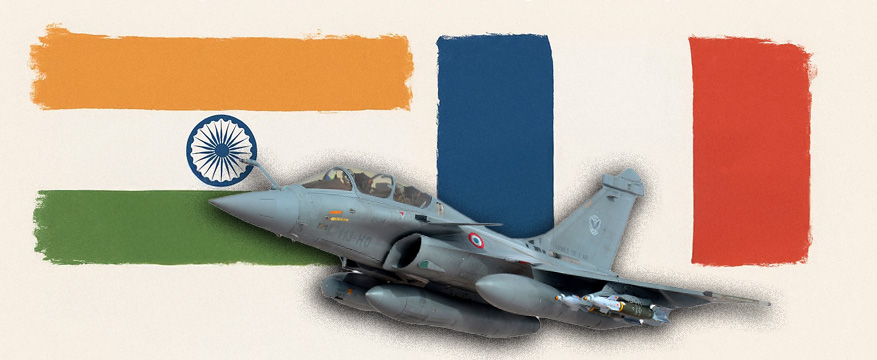
The conversation took place a few days after the defense acquisition council (DAC) approved the purchase of military hardware worth 3.6 lakh crore rupees. This included the purchase of 114 Rafale fighter jets from France. India will produce 96 of the planes, with 18 expected to be in fly-away condition.
The proposed Rafale deal was discussed during the talks on Tuesday, and Singh pushed for maximum indigenisation content in the fighters to be built in India, officials aware of the matter said asking not to be named. Ongoing talks with France are focused on localisation of the Rafales to be made in India, integration of local weapons and other India-specific requirements. India is pushing for an indigenous content in the region of 50-60%.
The Cabinet Committee on Security’s final approval, technical discussions, cost negotiations, and the launching of a tender are the next steps, so a real deal is still a long way off. The first step in the procurement process is the council’s acceptance of necessity (AoN) on February 12 for the new fighters, in addition to the other weapons and systems.
“Both ministers agreed to leverage this framework, both bilaterally and in the wider European context for tangible outcomes that will strengthen regional stability, enhance joint capabilities, and reinforce the enduring Indo-French strategic alignment,” the statement said.
Three months earlier, the Defense Research and Development Organization (DRDO) and France’s Directorate General of Armaments (DGA) signed an agreement to deepen collaboration in defense research and development. The 10-year defense agreement was renewed. Aeronautical platforms, unmanned vehicles, advanced materials for defense applications, cyber security, artificial intelligence, space navigation, advanced propulsion, advanced sensors, underwater technologies, and other areas of mutual interest are among the key areas of cooperation outlined in this agreement.
An MoU on a joint venture was also signed for the manufacturing of Hammer missiles between the chairman of Bharat Electronics Limited and executive vice president of Safran Electronics and Defence. A joint venture cooperation agreement (JVCA) was signed last year by BEL and Safran Electronics and Defence for the production of the smart weapon Hammer (Highly Agile Modular Munition Extended Range) in India. This was seen as a major push toward self-reliance. The Indian Air Force’s Rafale fighter jets are equipped with Hammer precision guided air-to-ground weapon, which was used during the four-day military confrontation with Pakistan in May under Operation Sindoor.
On terrorism, Singh said Pakistan has a long history of nurturing, nourishing, and promoting cross-border terrorism to create disturbance and violence in India. He stated that this has resulted in a serious threat to the region’s peace.
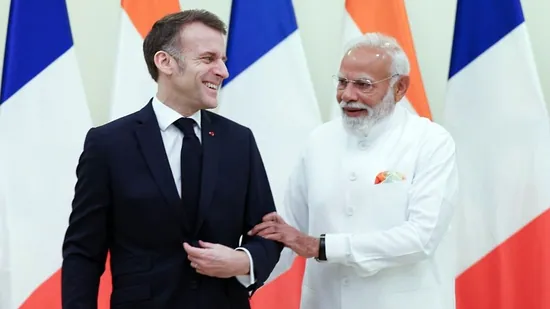
The final assembly line for the H-125 helicopter had previously been virtually inaugurated in Karnataka by Prime Minister Narendra Modi and French President Emmanuel Macron, with Singh and Vautrin present. The H125 programme represents an investment of more than ₹1,000 crore and is likely to create direct and indirect employment opportunities for India’s skilled and hardworking younger generation, Singh said. “Many foreign companies obtain numerous components from Indian MSMEs.” We invite companies to deepen this partnership through meaningful technology transfer and offer advanced solutions to meet the security needs of other countries as well,” he said.
Airbus Helicopters has set up a production line for the H125 helicopters in partnership with Tata Advanced Systems Limited (TASL) at Vemagal in Karnataka, the fourth such facility in the world and India’s first helicopter final assembly line in the private sector.
The facility is expected to produce the first H125 at the beginning of 2027. South Asian nations will also receive choppers made in India. In the beginning, the final assembly line in India will produce 10 H125s annually, with production increasing as orders increase. Airbus has projected a demand for 500 light helicopters of the H125 class in the country and south Asia during the next 20 years.
The partnership between Airbus Helicopters and TASL to assemble the H-125 helicopters in the country was announced in January 2024 during talks between Modi and Macron. The 2,8-tonne H125 can carry up to six passengers, fly at a maximum altitude of 23,000 feet, has a range of 630 km and a top speed of 250 kmph. The roles it is suited for include commercial transport, law enforcement, emergency medical services, disaster management, offshore industry and firefighting. These helicopters are currently produced only in France, the US and Brazil.