


The Real Estate Crash Hurts China’s Economy
The Real Estate Crash Hurts China’s Economy Millions of Chinese households have lost their savings due to falling apartment prices, but exports helped the economy grow by 5% last year.
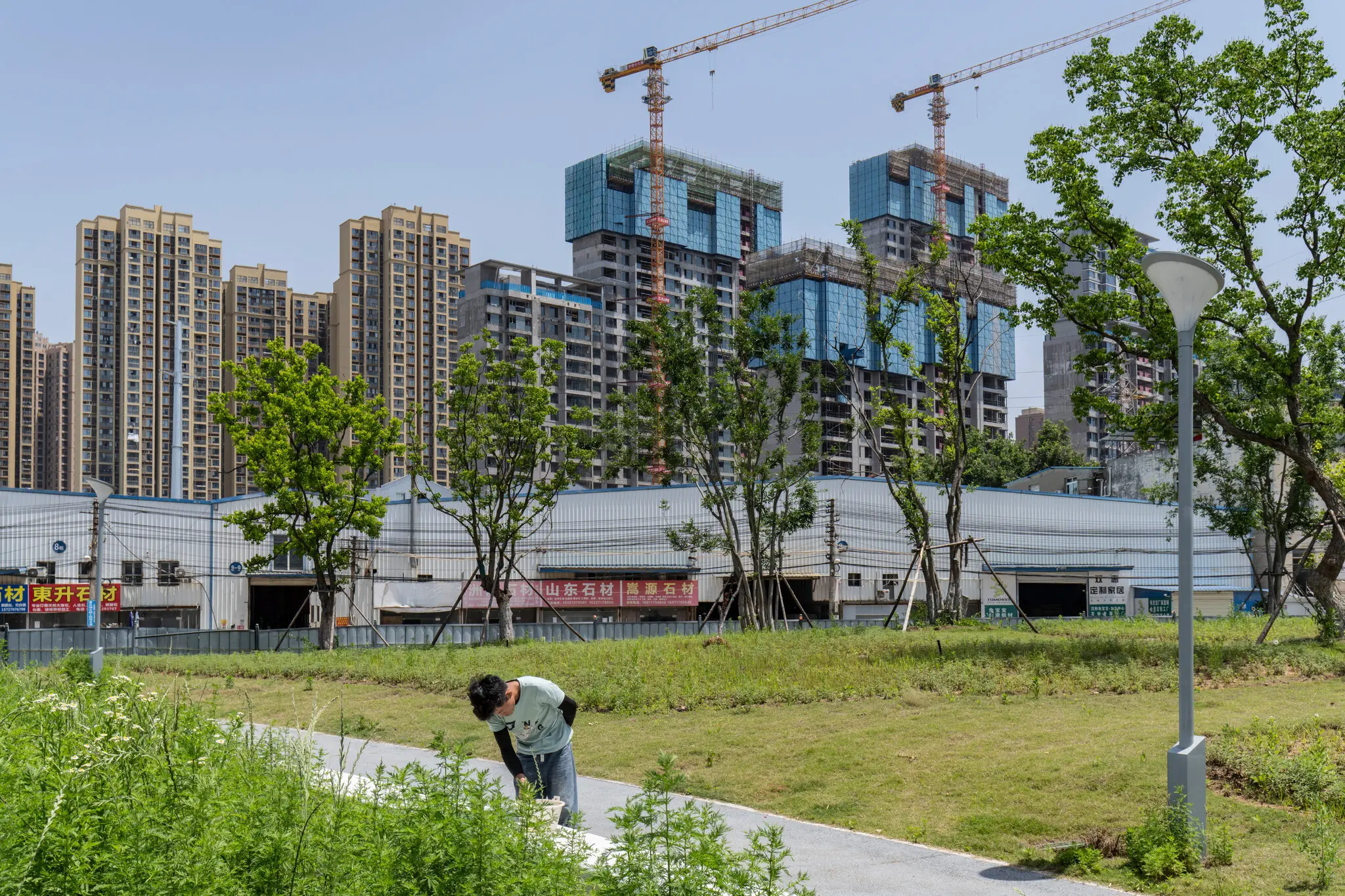
Prices for existing apartments are falling, and new home sales have fallen to their lowest level in more than 15 years in China. Due to the declining value of their homes, millions of households have reduced their spending. Local governments, whose revenue comes largely from real estate, are having trouble paying their employees.
At the beginning of last year, many people in China were concerned that the economy might face its greatest challenge in the form of a trade war with President Trump. But China’s overall trade surplus increased last year, and Beijing’s real issue turned out to be a housing market crash that started four years ago and has gotten worse with each month.
China’s statisticians continue to report predictably steady economic growth, fueled by a boom in exports that resulted in a record trade surplus of $1.19 trillion in 2025, despite the country’s slow-moving housing market crash. The National Bureau of Statistics reported on Monday that China’s economy expanded by 5% in 2017, which was the same as the previous year.
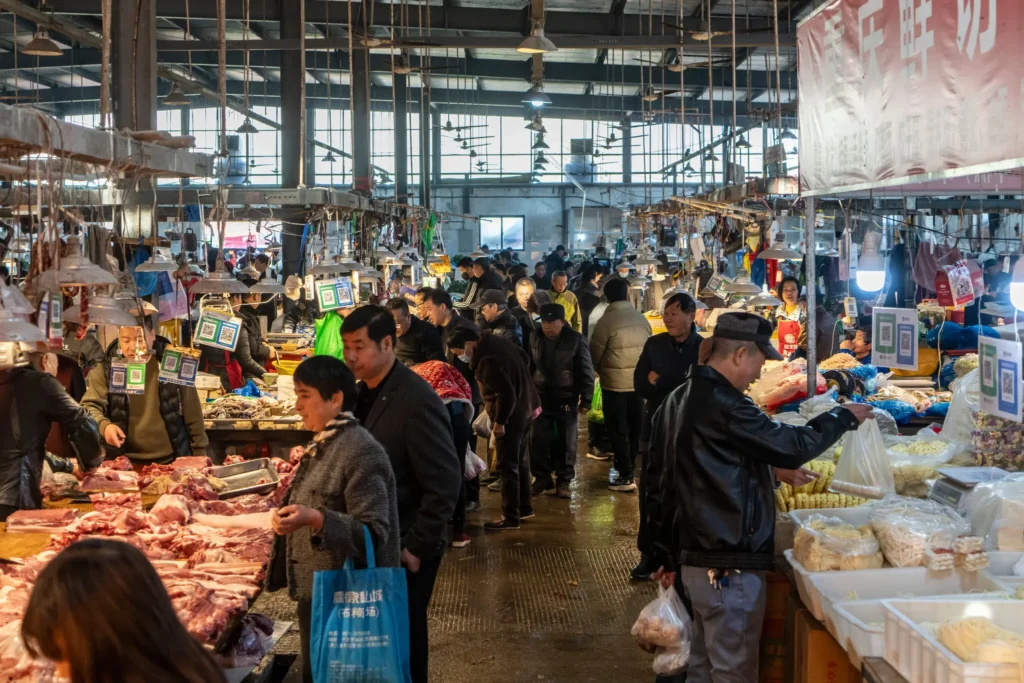
For the second year in a row, the official growth rate met the government’s goal, which was set in March. From October to December, the Chinese economy expanded at a rate that, if it continued for the entire year, would be 4.9%. Strong exports are compensating for poor household spending in both urban and rural areas.
The worst month for consumer spending since the Covid-19 pandemic occurred in November, when retail sales barely increased compared to a year earlier. Retail sales then fell 0.1% in December, despite the weak performance in November. The actual growth of the economy may now be half of what official statistics suggest, according to some Western economists. China’s economy is expected to slow further this year, according to the Rhodium Group, a New York-based research firm that focuses on China.
However, as part of a larger effort to boost consumer confidence, which government surveys have found to be extremely low, Chinese officials offered upbeat assessments of the economy. At a news conference to announce the economy’s performance, Kang Yi, the commissioner of the statistical bureau, stated, “Generally speaking, the national economy sustained momentum of steady progress in 2025 despite multiple pressures.” By 2021, approximately a quarter of China’s economy was made up of real estate and construction activities.
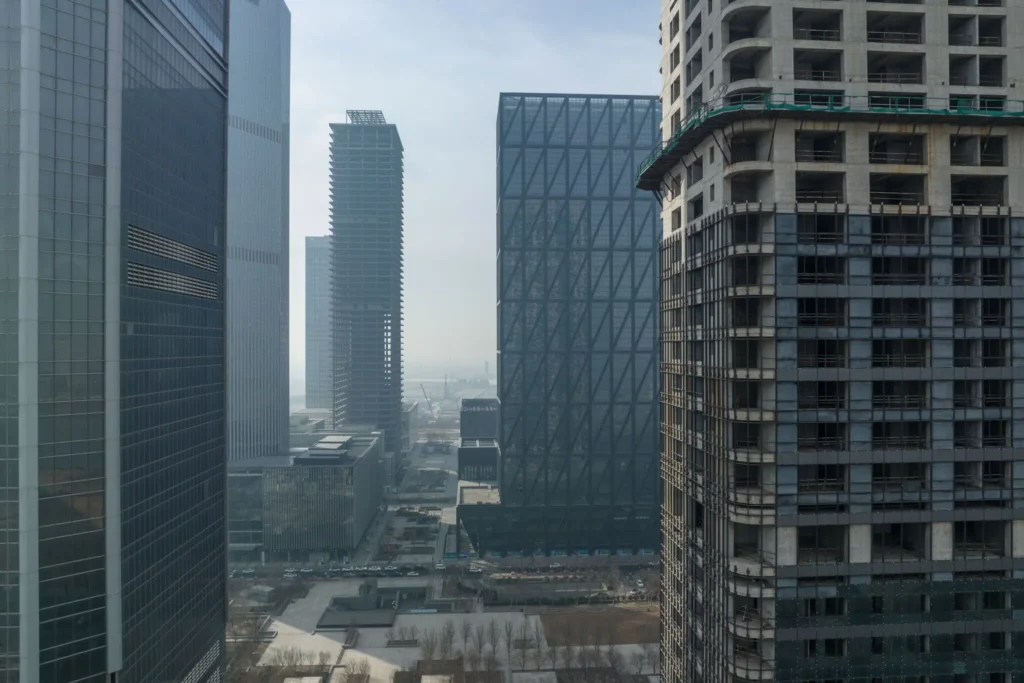
Therefore, the nation’s households and businesses have suffered as a result of the sector’s sharp slowdown. According to the statistics bureau, investment in brand-new apartment buildings, office towers, factories, and other fixed assets decreased by 3.8% in 2012. It was the first decline since 1989, when the government curtailed investment due to inflationary pressures that contributed to the massive protests in Tiananmen Square.
In an analysis that was published in November, Zhu Tian, an economics professor at the China Europe International Business School in Shanghai, wrote, “The sharp decline in the real estate sector can almost entirely explain the lackluster economic performance over the past three years.” Zhu Tian’s analysis was published in November.
Buyer’s remorse has also been brought on by the recession. Zoe Zhao, a 27-year-old civil servant in the city of Xi’an in central China, and her parents bought a house in October 2024 after prices had dropped, only to see them drop even more. She stated, “It’s difficult to say that I don’t regret it, but at least I can console myself that this apartment is for me to live in.”
“It’s just a good thing we didn’t buy at the peak,” I say. According to official data, prices have dropped by a fifth since 2021, which is roughly equivalent to the nationwide average decline that occurred during the housing market crash in the United States from 2008 to 2010. However, unofficial data suggest that price drops in China are at least twice as severe. Particularly for newly constructed apartments, the number of transactions has stalled.
According to a report released just this past month by the China Index Academy, a real estate research company, homes that are currently up for sale stay on the market for an average of 22.2 months prior to the closing. Since the market reached its peak in 2021, buyers have been demanding discounts of up to 80%. The apartment market has stalled in many cities as sellers have refused to accept such substantial losses.

In 45 years of following real estate markets in more than two dozen countries, Sam Radwan, chief executive of Enhance International, a Chicago-based real estate consulting firm, stated that he had never seen homes remain unsold for as long in China. He stated that real estate professionals remained extremely pessimistic during his recent travels throughout the country. Mr. says, “When you talk to everyone, they know there is no solution.” Radwan stated “In the next ten years, it won’t go away.” The fall in prices has shaken people’s faith in real estate, which was once thought to be the safest place for families to put their savings.
Now, the leaders of China want to get people back on board with the market. At the end of last year, the government began severely censoring negative online posts about the real estate markets in Beijing and Shanghai. The most well-known private-sector apartment price indexes have also been stopped from being released to the public. An improvement, according to some Chinese real estate experts, could occur as soon as this year.
In recent online commentaries, popular Chinese analyst Meng Xiaosu, who is also known as the “godfather of real estate,” predicted that prices would begin to recover this year. He stated, “That would also signal stabilization if measures arranged by the central government — such as converting the purchase of existing housing into affordable housing — can be implemented in certain areas.” Mr. Meng once said, “It has never fallen even in a year — how can it be a bubble?” Meng has long supported the real estate market.
In an effort to convert struggling developers’ unsold apartments into affordable housing, local governments have attempted to acquire them. However, local governments cannot afford to subsidize these transactions due to falling tax revenues and land sales. Mr., in the absence of significant markdowns, which developers are reluctant to implement, local governments will suffer significant losses from apartment rentals.
Radwan stated the real estate market’s problems stem from a glut of newly constructed housing and a decline in the number of births and marriages each year, which has slowed the demand for new homes. In 2024, China’s cities had approximately 440 square feet of housing for each man, woman, or child, up from 340 square feet just 15 years earlier. Before Mao Zedong’s death in 1976, each person had less than 100 square feet.