


To strengthen the role of the euro, the ECB establishes a global backstop.
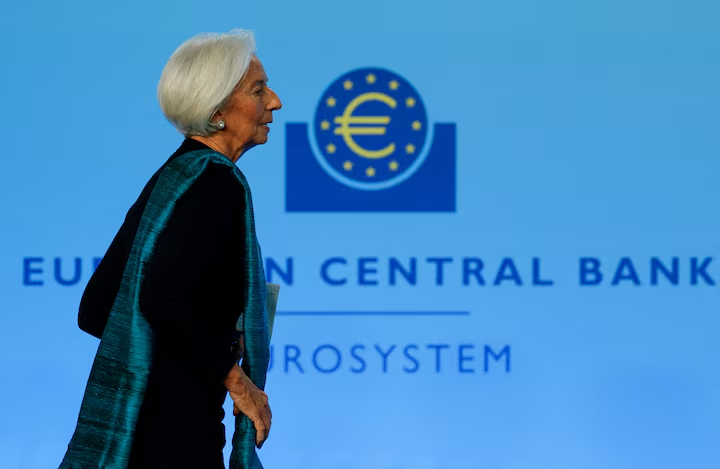
The European Central Bank announced plans on Saturday to expand global access to its euro liquidity backstop and make it permanent in an effort to strengthen the single currency’s international role. Access to such repo lines, a crucial source of funding during times of market stress, has been limited to just a handful of mostly Eastern European countries but ECB President Christine Lagarde has long seen the facility as a tool to boost the euro’s global reach.

Lagarde stated, for the first time, at the Munich Security Conference, “The ECB needs to be prepared for a more volatile environment.” “We must avoid a situation where that stress triggers fire sales of euro-denominated securities in global funding markets, which could hamper the transmission of our monetary policy,” she said in announcing the new facility.
The ECB stated that the facility, which will be available beginning in the third quarter of 2026, will be accessible to all central banks worldwide provided that they are not excluded for reasons of reputation, such as money laundering, terrorist financing, or international sanctions.
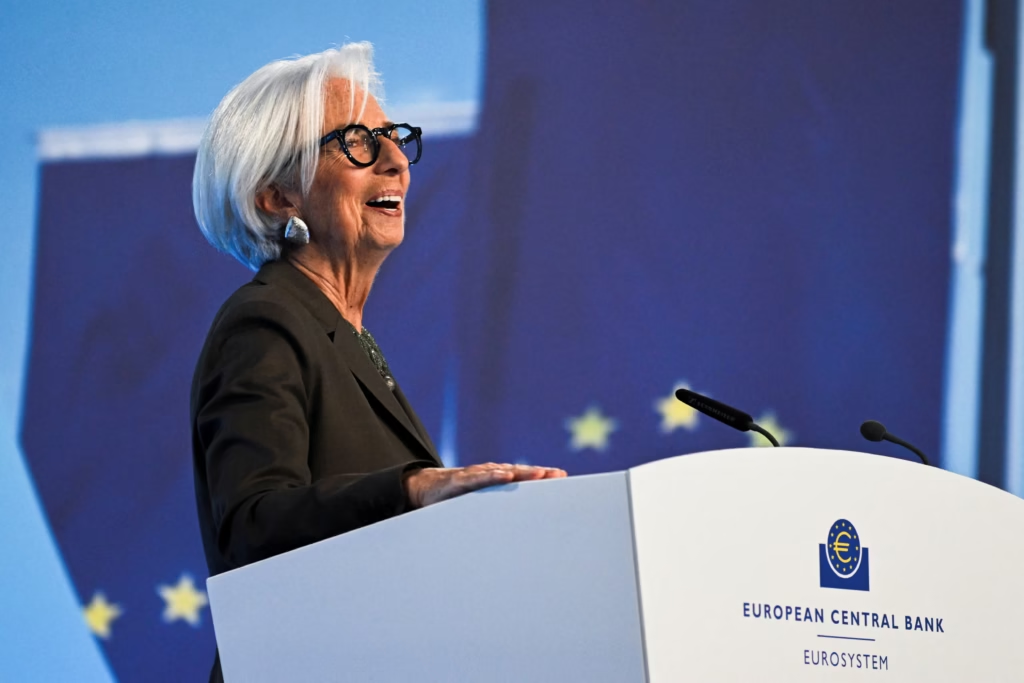
Lagarde stated, “This facility also reinforces the role of the euro.” “The confidence to invest, borrow, and trade in euros is boosted by the availability of a lender of last resort for central banks worldwide, knowing that access will be available during market disruptions.” The repo line allows lenders to borrow euros from the ECB against high-quality collateral and be repaid at maturity with interest when banks are unable to obtain market funding.
Unlike previous lines, which had to be extended from time to time, the new facility will provide standing access for up to 50 billion euros.
With investors reassessing the dollar’s status due to the unpredictable nature of U.S. Lagarde has argued that this was the right time for the euro to gain market share, despite the need for a new financial and economic architecture in light of President Donald Trump’s economic policy. The U.S. The FIMA Repo Facility, a similar tool maintained by the Federal Reserve, basically safeguards the Treasury market from stress, which could otherwise force lenders to sell government bonds below market value.

The European Central Bank stated in a statement, “These changes aim to make the facility more flexible, broader in terms of its geographical reach, and more relevant for global holders of euro securities.” Banks outside the 21-nation euro zone may be more inclined to purchase Euro-denominated assets if they have guaranteed access to the currency.