


In New York City, Muslims are attempting to assert political power.
Muslim organizers and religious leaders have been encouraged to join more formal political alliances and networks as a result of Zohran Mamdani’s elevation to mayor. Zohran Mamdani was quick to respond when Islamophobic attacks started to spread late in the race for New York City mayor. He traveled to a mosque in the Bronx with a group of key allies, including leaders of the Muslim faith and the community, to protest the offensive remarks. It was a telling display of kinship and support among a new voting bloc that had been quietly coming together in their communities for years but had only just begun to gain political power.
Right now, Mr. With Mamdani in charge of City Hall, Muslims in New York are working to build on their progress since the mayoral election and establish a foothold in the city’s organizing networks. Additionally, the Bronx has been the focus of their efforts. A Bronx group of mostly Muslim organizers and religious leaders voted on Thursday to join the Metro Industrial Areas Foundation, one of the oldest nonpartisan organizing networks in the country.
The heads of the city’s most influential Black churches, community centers, and synagogues are among the group’s New York cohort, which has been at the forefront of a decades-long interfaith push for affordable housing and public safety.
Additionally, the organization has trained a cadre of organizers in Brooklyn, Queens, and Manhattan in community activism and government accountability. The foundation will now include a broader coalition under the name “Bronx First,” which includes more than 40 mosques and dozens of community centers and churches. The self-funded coalition had raised nearly $160,000 for their efforts by the end of the evening.
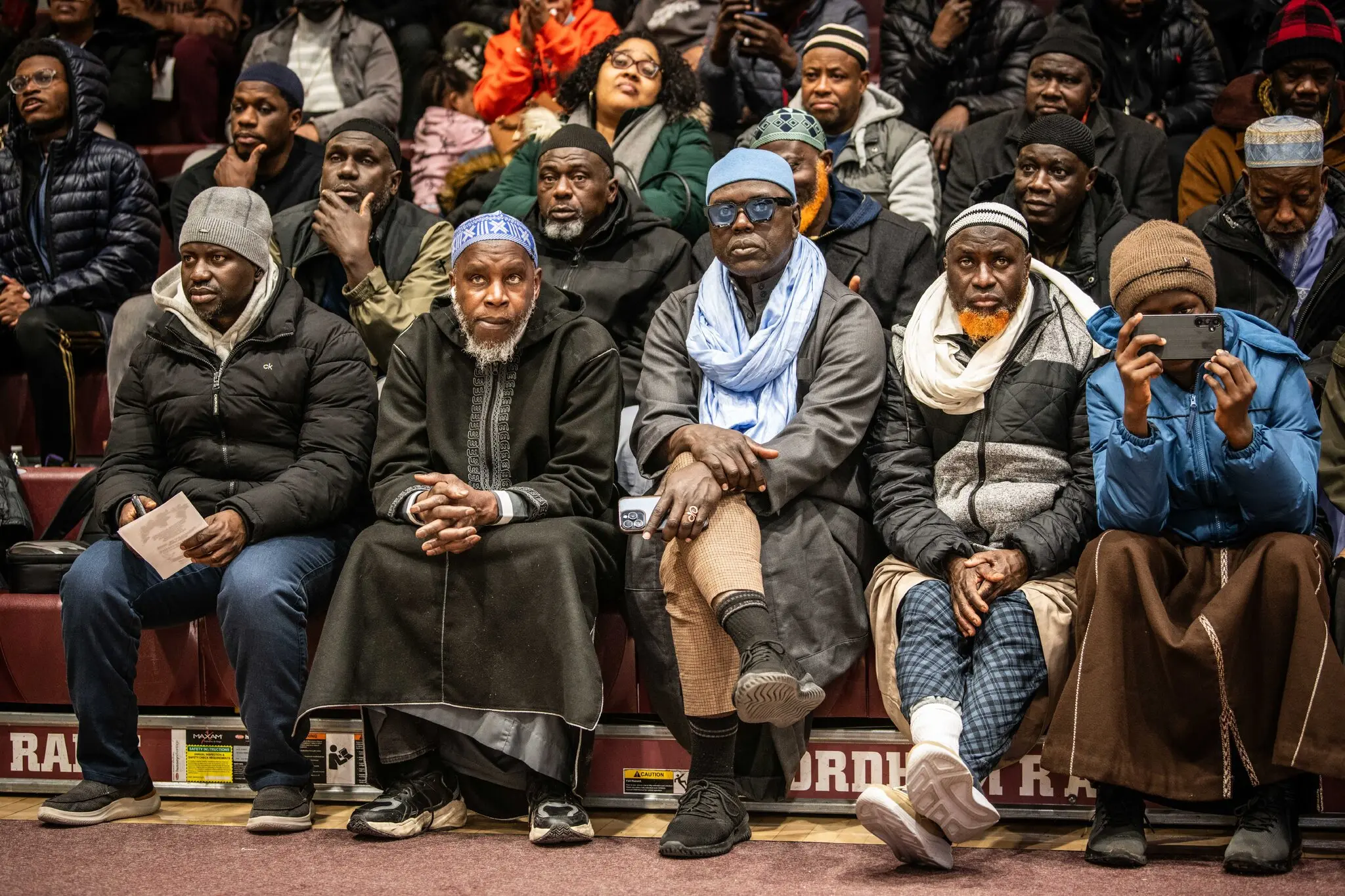
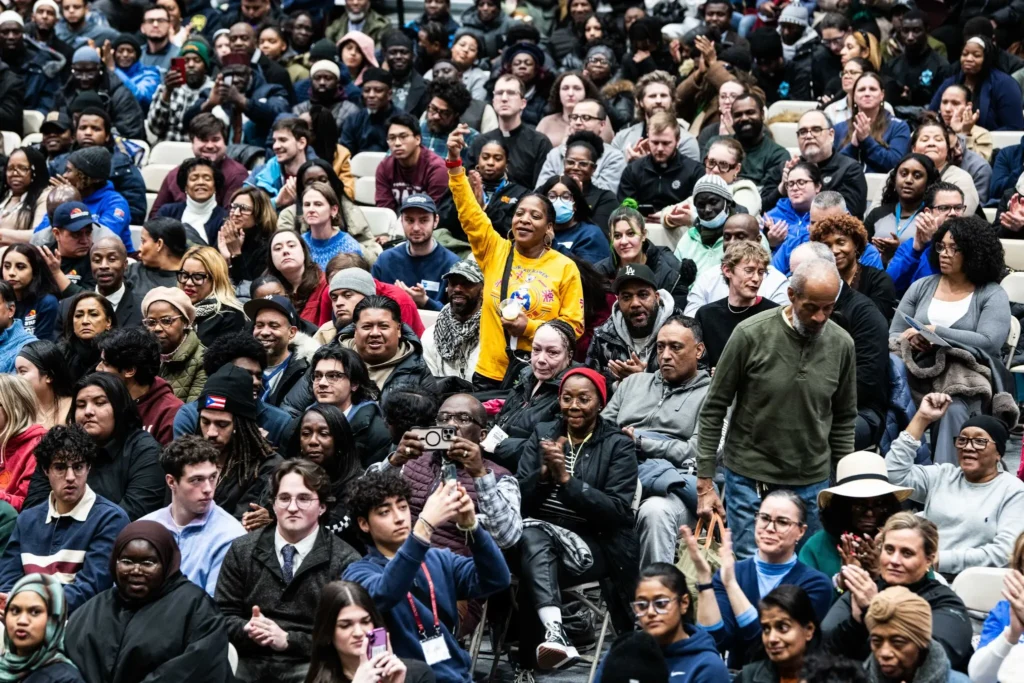
Their leaders’ primary focus is on accountability rather than access, and their aim is largely centered on policy objectives. Around 2,000 people of all faiths, generations, and socioeconomic backgrounds gathered at Fordham University on Thursday to vote to officially join the coalition.
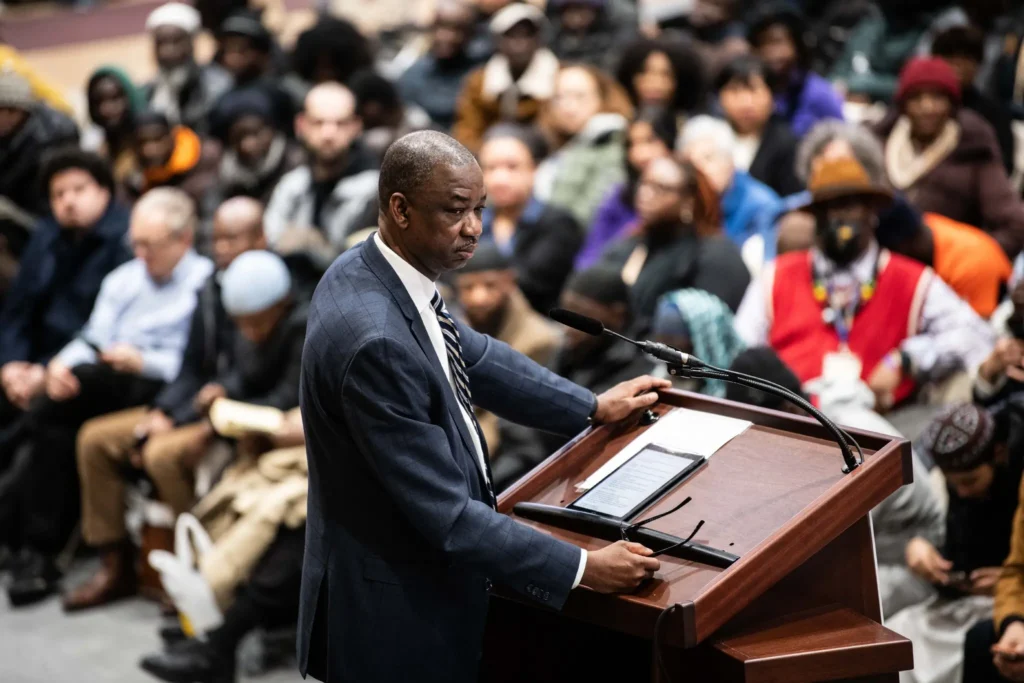
Their presence represented a one-of-a-kind display of political power by a group of people rarely seen together. Haji Dukuray, an Islamic Cultural Center of the Bronx board member who helped organize Thursday’s event, stated, “We all face the same challenges as everybody else in the community.”
He continued, “It’s great we have a Muslim mayor, but that’s just an example of how well we can do when we come together as a group.” Several speakers made negative remarks about Mr. Mamdani, whose absence was viewed by some as a criticism of the group that contributed to his victory months earlier. Mr. In his opening remarks, Dukuray brought up the mayor’s absence, drawing some jeers from the audience.
We invited him, but he decided to decline our invitation. That is a huge error on his part,” he declared. “However, we don’t require him here to organize ourselves,” The group reiterated its top demands for city leadership, which included access to resources for mental health, affordable housing, and public safety. The group has focused particularly on the supply of affordable housing in the city. These efforts have intensified as a result of ongoing housing and food affordability crises that have already forced hundreds of thousands of long-term residents to leave.
However, the younger Muslim members of the group have emphasized the need for additional public safety measures in their communities by citing instances of gang violence that have harmed their members. Because many of those in the group are immigrants from West Africa and the Middle East, the rise in detentions and deportations in cities has made matters even more pressing. Mr.
During his campaign, Muslim South Asian Mamdani, who was born in Uganda, shared his message about affordability with the mosques and Islamic community centers in the city. His campaign inspired a record number of Muslim voters in the city to cast ballots in support of him, prompting his opponents to broaden their campaign outreach to Muslim communities.
Before Mr., Democratic candidates did not heavily target Muslim voters. The campaign of Mamdani. According to the organizers, when they did attempt to enter the bloc, their messages frequently contained errors. The Bronx, where voter turnout has historically been the lowest of the five boroughs, saw the most disinterest among Muslim voters.
However, the polling firm L2 found that Muslim New Yorkers increased their participation in the most recent mayoral election by more than three times, going from nearly 22,000 voters in the 2021 race to just over 66,000 in 2025. Because they view politics as a corrupt and untrustworthy system, many Muslim leaders have been reluctant to become politically involved and have cautioned congregation members to be cautious.
However, in recent years, a greater number of people have come to believe that avoiding involvement would only be detrimental to Muslim communities, particularly in light of the shortage of high-quality, affordable housing. Tragedies like the 2022 fire that killed 17 people, many of whom were Muslims from West Africa, are caused by the shortage.
According to Afaf Nasher, executive director of the Muslim civil rights organization Council on American Islamic Relations, “this mentality of “listen, we’re here to do well for ourselves and our communities and to show our neighbors that we’re good people” has kind of shifted over to “we’re being treated like crap and need to empower ourselves.” “This is not the Muslim community’s attempt to gain power for the sake of gaining power,”